Do we actually need more leadsare we losing the ones we already have?
You may not need more leads. You may need to find where the money disappears.
I help business owners examine what happens between attention, enquiries, revenue, repeat business and operating cost — then decide what should change before they spend more on ads, people, software, automation or AI.
BNI member? Start with a One-to-One.
Have a specific business problem you want diagnosed? That becomes a Strategy Consultation.
Attention → Lead → Response → Follow-up → Sale → Retention → Revenue. Value leaks at the quiet stages, until the system is redesigned.
12+
Years
Business, growth & systems
100+
Businesses
Advised across five industries
BNI India
Featured in
Success Stories BNI Vision, Bhopal · Category: Business Consultant
Success Stories BNI Vision, Bhopal · Category: Business Consultant
More leads?Maybe not.
The Growth Leak
Most businesses don't have only a lead problem.
Some have a different problem wearing a lead problem's clothes. The business owner sees the symptom. I look for the system underneath it.
Symptoms are loud.
Causes are quiet.
More activity does not automatically mean more growth. The expensive question isn't “What can we automate?” It's “What should happen in the first place?”
- 01A response problem — enquiries wait
- 02A follow-up problem — next steps depend on memory
- 03A conversion problem — interest never becomes a decision
- 04A retention problem — the relationship ends at payment
- 05A customer-economics problem — acquisition costs more than it returns
- 06A process problem — good people, inefficient system
- 07A measurement problem — nobody can see where it breaks
- 08A software-complexity problem — tools that don't talk to each other
- 09An AI-implementation problem — capability without a defined job
Every one of these looks like “we need more leads” from the outside.
Very few of them are solved by more leads.
The ₹100 growth journey
You spend ₹100 to create attention. How much of it actually becomes customer value?
Follow the money through the eight stages every business runs, whether it has drawn them or not. The leaks are conceptual — the point is to recognise yours.
01
Attention
Attention → EnquiryTraffic without intent. Reach that never turns into a question.
02
Enquiry
Enquiry → ResponseSlow or inconsistent response. The enquiry cools before anyone answers it properly.
03
Response
04
Qualification
Response → Follow-upNo structured next action. What happens after the first reply depends on who remembers.
05
Follow-up
Follow-up → SaleConversion friction. Pricing, proof, process or timing gets in the way of a decision.
06
Sale
Sale → RepeatThe customer relationship stops after payment. Nobody owns the second purchase.
07
Repeat purchase
Repeat → ReferralNo systematic advocacy loop. Happy customers are never asked, at the right moment, in the right way.
08
Referral
Growth doesn't only happen at the top of the funnel.It can disappear anywhere inside the system.
Where could mine be leaking?No figures are attached to the leaks on purpose. Yours are specific to your business — which is exactly the conversation.
Self-diagnosis
60-second Growth Leak Check
Five questions. No complicated audit. Just enough to make you think.
Answer honestly — nobody is watching
0 of 5
The interesting question isn't whether these can be automated.
It's what is actually causing them.
This isn't a validated assessment and it doesn't estimate any loss. It's a prompt for a better conversation.
Nothing is stored or sent anywhere. Your answers stay in this browser tab.
More software?Maybe less.
The numbers
The expensive part of growth is often what happens after the lead arrives.
A few published figures, each from a named source, that say the same thing from different directions: the gap is rarely at the top.
AI in business
Access to AI is no longer the advantage.Integrating it into the right workflow is.
McKinsey & Company, The state of AI in 2025 — survey of 1,993 respondents 1
Ecommerce
70.22%
Average documented online shopping-cart abandonment rate, across 50 studies.
Acquisition created the opportunity.Something after acquisition lost it.
Baymard Institute, cart-abandonment statistics, updated 2025 2. Not every abandoned cart is recoverable — that isn't the point.
Personalisation in India
The customer expectation exists.The operating system often doesn't.
Adobe, 2025 AI and Digital Trends, India — 841 consumers surveyed 3
Retention economics
5%
A 5% increase in customer retention was associated with a 25%–95% increase in profit in foundational research by Bain & Company. Historical, cross-industry, and not a benchmark for any one business.
A small change in retention can have disproportionate economics.
Bain & Company / Frederick Reichheld, loyalty economics research 4
Acquisition vs retention
5–25×
Research summarised by Harvard Business Review suggests acquiring a new customer can cost roughly 5 to 25 times more than retaining an existing one — depending heavily on industry.
The cheapest customer to grow is usually the one you already have.
Harvard Business Review, The Value of Keeping the Right Customers, 2014 5
- McKinsey & Company, QuantumBlack — The state of AI in 2025: Agents, innovation, and transformation (November 2025); companion chart AI at work but not at scale. 88% of respondents report AI use in at least one function; 7% report AI fully scaled.
- Baymard Institute — Cart Abandonment Rate Statistics: average of 70.22% calculated from 50 studies; page updated September 2025.
- Adobe — 2025 AI and Digital Trends, India media alert (June 2025), research by Oxford Economics: 77% of Indian consumers want personalised recommendations and offers; 53% say they currently receive them.
- Bain & Company, Frederick F. Reichheld — loyalty-economics research (1990s–2000s) associating a 5% retention increase with a 25%–95% profit increase. Cited as historical research, not a current universal benchmark.
- Harvard Business Review, Amy Gallo — The Value of Keeping the Right Customers (2014), summarising research that acquisition can cost 5–25× more than retention depending on industry.
One result, on the record
Growth came from redesigning the system — not from doing more of the same.
₹35 lakh
Annual revenue — before
₹1.4 crore
Annual revenue — after
4× within one year
Historical client case. Siddharth helped a service-based education business scale annual revenue from ₹35 lakh to ₹1.4 crore through strategy, funnel redesign, automation and system optimisation.
One result. Not a promise.The point is not the number. The point is that growth came from redesigning the system — not simply increasing activity.
Only the verified starting and ending figures are shown. Results depend on the business, its market and its execution.
Six expensive questions
Worth answering correctly before the next rupee, dollar or dirham leaves the account.
These are the questions I hear underneath most requests for “more marketing”. Open one to see how I'd start thinking about it.
Should we hire another personredesign the process first?
Should we spend more on acquisitionget more value from existing customers?
Do we really need an AI agenthave we not defined the business problem yet?
Should we add another toolremove the complexity we already created?
Is our team the bottleneckis the system making good people inefficient?
The answers are specific to your business. That's the conversation.
Schedule a BNI One-to-OneAI agent?First, define the job.
The decision framework
Don't automate the mess.
Automating a broken process only makes the waste happen faster.
My sequence is different.
01Eliminate
Does this activity need to happen at all?An unnecessary node removed.
02Simplify
Can the process be reduced before introducing technology?The tangle collapses into a pathway.
03Systemise
Can we create a reliable process before automating it?Pieces snap into an order.
04Automate
Which repetitive decisions and actions can technology handle?The loop runs on its own.
05Agentify
Where does AI need context, reasoning, memory or tool access?Context in, judgement, tools out.
06Scale
Once the economics and process work, how do we multiply them?The working system replicates.
Technology comes after the business logic.
Proof
Recognition is nice. Trust is better.
Three layers, in the order I'd want to see them if I were you: the business experience, the BNI record, and what members say in their own words.

BNI India
Success
Stories
Stories
National recognition · BNI India
Across the BNI Bhopal Region, one member has been featured on the national BNI India Success Stories platform.
It isn't a recognition you can apply for or buy your way into. It reflects what the last few years actually looked like — consistent relationship-building, practical problem-solving, and contribution through BNI, long before any of it paid off.
1 of 1Member featured from the Bhopal Region
12+ yearsBusiness, growth and systems experience
100+Businesses advised across five industries
- Siddharth Pal — BNI Vision, Bhopal · Category: Business Consultant
- Regional One-to-One Coordinator — BNI Bhopal Region
- Regional Marketplace Coordinator — BNI Bhopal Region
- Founder — Unofinn Ventures Private Limited
BNI has been an important part of how I think about business: understand before you recommend, relationships before transactions, and credibility through contribution. Being featured in BNI India Success Stories is meaningful to me because it reflects something I value deeply: trust built over time.
An editorial feature about a member's journey — not an endorsement of any commercial service.
Client & member voice
Different businesses. The same pattern.
Nobody below talks about a tool. They talk about being understood first, about practical plans, and about conversations that didn't turn into a pitch. Eight testimonials, all reproduced word for word.
Siddharth never rushed to begin… he took sufficient time to research my business and then came with a very practical implementation plan.
I started noticing positive difference in business performance from the first month.
Ishan GargKrishna Associates · 07/08/2026
My hunting for a business growth support ended when I met with Siddharth. I was heavily struggling with a lot of manual work and was lacking in implementation of AI in my business. Siddharth never rushed to begin, he took sufficient time for the very well research focused to my business and then came with a very practical implementation plan. We started implementation in phases and I started noticing positive difference in business performance from the first month. I am really happy to write this testimonial for Siddharth. He is best in everything he do. Highly recommended. Thanks a lot Siddharth.
Siddharth was an instrumental connect for me to understand what is it that would help me take the steps and chalk them out for me as well.
In case you wish to accelerate your business outreach, I strongly suggest a 1-to-1 with Siddharth.
Gurwin Singh SahniGlobe Audio
I've been identifying a certain number of aspects of my business which needed a revamp in order to make that over the top leap considering how the market is changing. Siddharth was an instrumental connect for me to understand what is it that would help me take the steps and chalk them out for me as well. In case you wish to accelerate your business outreach, I strongly suggest a 1-to-1 with Siddharth. Eagerly waiting for the processes we're working on to come to fruition.
Siddharth Ji is one of those people with whom you can openly discuss a business challenge without feeling that the conversation will immediately turn into a sales pitch.
He often notices gaps in follow-ups, communication, and day-to-day systems that business owners may overlook.
Aayan KidwaiSunrise Enterprises
Siddharth Ji is one of those people with whom you can openly discuss a business challenge without feeling that the conversation will immediately turn into a sales pitch. Whenever we have spoken, he has listened patiently and shared his views in a simple and practical manner. He often notices gaps in follow-ups, communication, and day-to-day systems that business owners may overlook because they are busy handling regular operations. I have found him approachable, sincere, and willing to help. I would be comfortable connecting him with someone who wants to understand how AI and automation can be used sensibly in their business.
Why have a One-to-One with Siddharth?
Don't book a One-to-One to hear my pitch.
Book it because we haven't yet figured out how useful our networks might be to each other.
In our BNI One-to-One, I want to understand how your business makes money, what an ideal referral looks like for you, what problems your customers repeatedly mention, and where our networks overlap. You should understand the same about me.
That's the relationship conversation.
If at some point you want me to deeply diagnose your growth, AI, customer journey or business systems, that becomes separate strategic work.
BNI One-to-One
Two businesses, two networks
Relationship, businesses, GAINS, networks, ideal introductions, referral opportunities — and understanding each other.
UnderstandNetworksGAINSReferralsIdeal introductions
Schedule a BNI One-to-One
Strategy Consultation
Your business, examined
Deep diagnosis of your own business: revenue leakages, growth strategy, customer economics, AI decisions, process redesign, technology evaluation and a prioritised action plan.
- Your business
- Diagnosis
- Decisions
- Priorities
Relationships start with a conversation.Serious business problems deserve focused strategic work.
The secondary path
I have a business challenge.
When the conversation moves from “let's understand each other” to “help me decide what to do about this”, it becomes a paid Strategy Consultation. That keeps the One-to-One honest — and the diagnosis serious.
Bring one important business challenge. We map the problem, challenge the assumptions behind it, identify the highest-value leakages and opportunities, evaluate economics, process, people, data and technology — and decide what should be eliminated, simplified, systemised, automated or agentified, in that order.
- What the real problem appears to be
- The one to three highest-priority actions
- What not to spend money on yet
- Where AI or automation is actually justified — and what can stay human
- What should happen first, and what can wait
Sometimes the most valuable outcome is deciding not to buy something.
A note on implementation
Strategy comes first. When implementation is required, it may be executed by your internal team, an existing vendor, or Siddharth's implementation ecosystem — whichever makes the most sense. There is no requirement to purchase implementation after a consultation.
Good consulting is collaborative: the quality of the decision depends on the quality of the context you bring.
BNI Relationship Hub
Everything you'd want before our One-to-One.
GAINS, TOPS, my current ask, contact sphere, referral triggers and what to listen for — organised so you can find exactly the part you need, without scrolling through all of it.
GGoals
Help growth-focused businesses use practical AI agents and automation systems to improve sales conversion, follow-up consistency, customer support, and operational scalability — without unnecessarily increasing team size.
AAccomplishments
12 years of experience in business strategy, growth systems, digital transformation, and automation. Helped 100+ businesses across ecommerce, education, healthcare, services, and consulting improve revenue systems, operational efficiency, customer experience, and decision clarity. Scaled a service-based education business from ₹35 lakhs to ₹1.4 crores in annual revenue within one year through strategy, funnel redesign, automation, and system optimization. Designed and deployed AI-assisted systems across marketing, operations, follow-ups, and customer communication.
IInterests
Business growth strategy, ecommerce scaling, consumer behavior, product research, AI tools, automation frameworks, customer journey design, ad campaign analysis, brand building, long-term growth systems, public speaking, learning deeply, playing guitar, reading, writing poetry, and exploring peaceful places like mountains, hill stations, and lakes.
NNetworks
D2C founders, ecommerce brand owners, Shopify and WooCommerce businesses, performance marketers, website developers, branding consultants, business coaches, CAs, consultants, healthcare businesses, education businesses, service businesses, agency owners, CXOs, BNI members, digital marketing agencies, IT companies, and retail business owners.
SSkills
Business Growth StrategyAI StrategyAI AgentsAgentic AI
Revenue Leakage AnalysisCustomer Journey PlanningEcommerce Growth
Lead QualificationFollow-Up SystemsSales Funnel Strategy
CRM AutomationConversion Rate OptimizationProduct Research
Business Process AutomationDeep Data AnalysisAI Workflow Design
WhatsApp CommercePublic Speaking
Ideal Referral
A growth-focused D2C, ecommerce, retail, or service business owner who already gets inquiries but is not seeing consistent conversions. Best referral signs: they spend on ads but ROI is not improving; they receive WhatsApp, website, Instagram, or marketplace inquiries but replies are delayed; their team misses follow-ups; leads are not qualified properly; customer support is repetitive and manual; repeat purchases, reviews, or referrals are weak.
Top Consulting Areas
- Growth bottleneck & revenue leakage diagnosis
- AI strategy and implementation roadmap
- Customer economics — AOV, LTV, repeat purchase
- Sales follow-up and lead nurturing architecture
- Cost and operational efficiency review
- Software stack and tool evaluation
- AI-commerce and WhatsApp revenue strategy
- Employee + AI workflow design
Top Problem Solved
Business owners spending money in the wrong place. Most know something is wrong — growth has stalled, costs are rising, follow-ups are inconsistent, AI is being discussed without a business case. I help them identify what is actually restricting growth, where money is leaking, what should change, what should not change, and where AI can create real leverage — before more money goes into execution.
My Ideal Referral Partner
Professionals who work directly with business owners and decision-makers, including CAs, tax consultants, business coaches, management consultants, digital marketing agencies, branding consultants, website developers, Shopify/WooCommerce experts, ERP/CRM providers, legal advisors, CFO consultants, healers, astrologers, and IT companies. They often notice growth bottlenecks, operational overload, weak follow-ups, poor conversion, or scaling challenges where a strategic diagnosis creates immediate value.
My Favourite BNI Story
My favourite BNI stories are the ones where members stop selling and start solving. Referrals work best when trust is built first — through consistent presence, genuine understanding of each other's business, and a clear intention to help.
Current Ask
- Business owners who are about to invest in growth, people, software or AI and want a second opinion first.
- Owners with years of customer data but weak repeat business.
- Businesses whose operating costs are rising faster than revenue.
Dream Ask
- Introductions to jewellery, fashion, food, retail and D2C brand owners evaluating AI-commerce.
- Founders planning an AI agent or automation programme who need the business case built first.
- Digital marketing, website and IT agencies whose clients need strategic AI direction.
- 1Business Coach
- 2D2C Brand Owner
- 3Healers / Astrologers
Secondary sphere
Digital marketing agenciesWebsite developersIT companies
CAsConsultantsBranding agenciesShopify / WooCommerce experts
01Established D2C, retail & product brands
“Siddharth helps product and retail businesses work out where revenue is leaking and how to increase order value and repeat purchases — before they spend more on ads.”
02Owners evaluating AI or automation
“Siddharth helps businesses decide where AI genuinely makes financial sense, and where it doesn't, before anything gets built.”
03Businesses with customer data but weak repeat sales
“Siddharth helps owners turn existing customer data into retention, reactivation and additional revenue.”
04Teams whose costs grow faster than output
“Siddharth helps identify which manual work should be eliminated, simplified or systemised before hiring or buying more software.”
05Digital marketing, website & IT agencies
“Siddharth can act as the strategic thinking partner for your clients' growth and AI decisions — and, where implementation is needed, it can be handled separately by whoever is the right fit.”
Weekly presentation 1
This week I'm looking for introductions to business owners who are about to spend money on growth, people, software, automation or AI — but aren't completely sure where the real bottleneck is. I help them diagnose what is actually restricting growth before the money is committed.
“Leads are coming but revenue isn't growing.”
“We want to use AI but don't know where to start.”
“Follow-ups depend on individual employees.”
“Our costs keep increasing.”
Weekly presentation 2
Many businesses keep increasing spend when the real leakage sits somewhere else entirely — in customer economics, follow-up, retention or an unnecessary process. Before spending more, I help owners find where the money is actually going and what should change first.
“Thousands of past customers, weak repeat business.”
“Too many disconnected tools.”
“Customer acquisition is getting expensive.”
“We need to increase AOV or lifetime value.”
BNI roles & recognition
- Member — BNI Vision, Bhopal · Category: Business Consultant
- Regional One-to-One Coordinator — BNI Bhopal Region
- Regional Marketplace Coordinator — BNI Bhopal Region
- Featured in BNI India Success Stories — national platform
Useful for our One-to-One
- Founder — Unofinn Ventures Private Limited
- 12+ years across business strategy, growth systems and automation
- 100+ businesses advised across five industries
- Client work across cement, education, jewellery, audio and fashion retail
- Also runs AI readiness training for teams and chapters
Client examples
Ochira Infra — Cement, Bhopal
Artjio Online Drawing Classes — Education, Agra
Varniya — Diamond brand, Surat
ELK Audios — Audio, Bhopal
Fashion Factory Outlet — Fashion retail, Bhopal
When should you think of Siddharth? Introduce me to a business owner who is about to spend money on growth, people, software, automation or AI — but isn't completely sure where the real bottleneck is.
Primary referral trigger
Introduce me to a business owner who is about to spend money on growth, people, software, automation or AI — but isn't completely sure where the real bottleneck is.
We are getting leads but revenue isn't growing proportionately.
We know AI can help us, but we don't know where to start.
Our operating costs keep increasing.
We have thousands of past customers but weak repeat business.
We want an AI agent but need somebody to think through the business case first.
We use too many disconnected tools.
Our sales follow-up depends too much on individual employees.
Customer acquisition is getting expensive.
We need to increase AOV or customer lifetime value.
We want to use AI sensibly, not just because everybody is talking about it.
Full introduction script
I'd like you to meet Siddharth Pal. He works with founders on business growth and AI strategy. Rather than starting with a tool or software, he first looks at the business — where revenue may be leaking, where processes are inefficient, and where AI or automation can actually create ROI. I think a conversation with him could give you a useful outside perspective on what to prioritise next.
Short version
Siddharth helps business owners make better growth and AI decisions before they spend money on implementation. I think you two should connect.
Social proof, the analogue kind
Relationships are built offline.
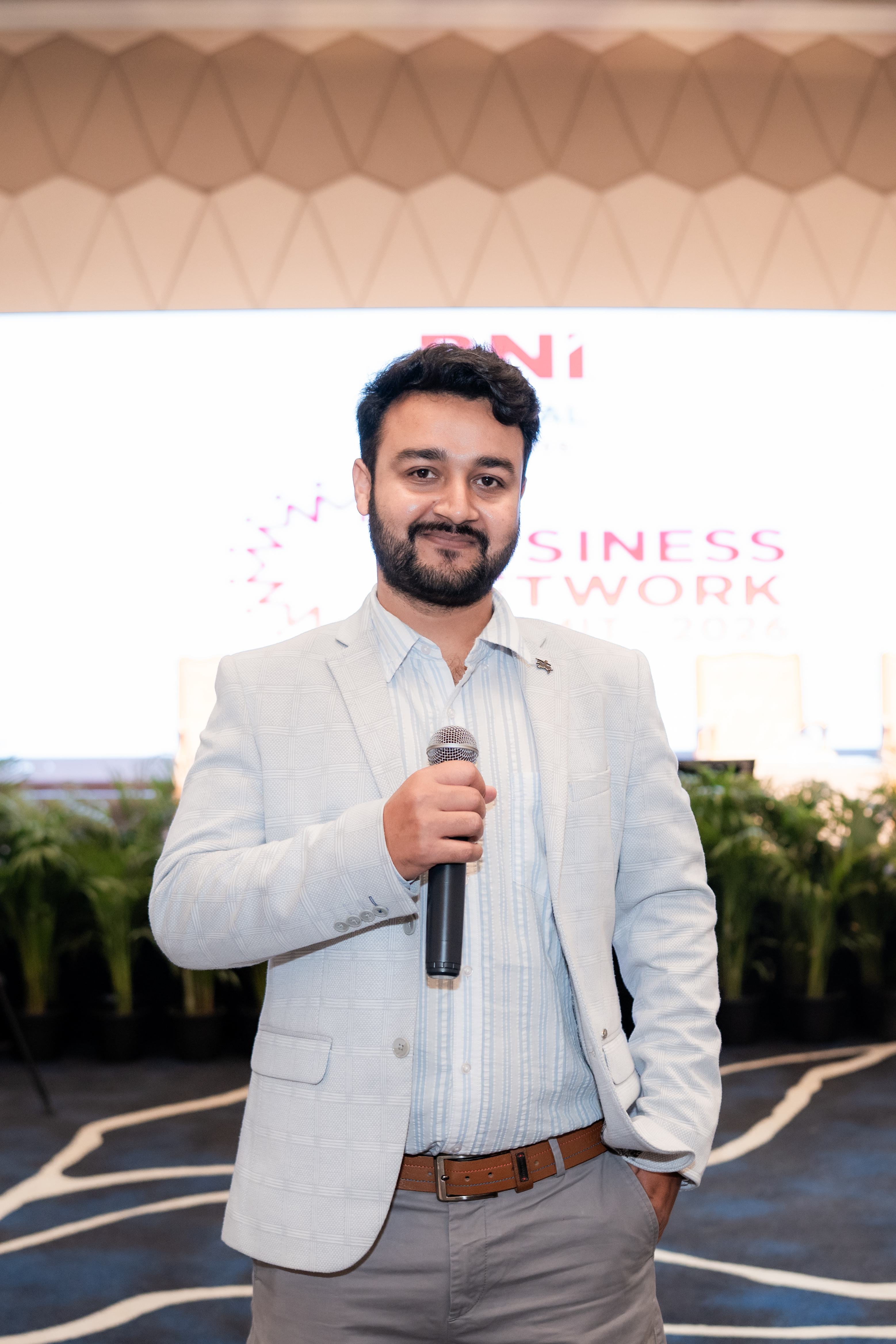
Moments from chapter meetings, the marketplace, One-to-Ones and regional activity across Bhopal.
Tap any photo to open it full size.


The person behind the questions
I have spent more than a decade learning that growth rarely comes from one clever tactic.
My work sits at the intersection of business strategy, customer behaviour, growth, systems, automation and AI. Over the years I have worked across different industries and business models, and when you look at enough businesses, patterns begin to repeat:
- where leads disappear,
- where teams become bottlenecks,
- where software creates complexity,
- where customer data goes unused,
- where founders optimise the wrong metric,
- and where technology creates genuine leverage.
Today, my role is increasingly simple: help business owners see the system more clearly before they decide what to change.
Guitar
Reading
Poetry
Mountains & Lakes
Deep Learning
Loves Pets
I quietly support education for a few underprivileged children, and I value meaningful relationships and building things that genuinely help. Separately, I run AI readiness training for teams and BNI chapters — explore AI training →
One good conversation
You probably don't need another website to read. You probably need one good conversation.
If you're a BNI member, let's first understand each other's businesses, networks and opportunities. No pitch deck required.
Business diagnosis and consulting are separate from a standard BNI One-to-One.